Foundation age
2011 to 2014 · the framework finds its shapeA framework, then a way to put it on a server. Forge arrives in the same year as the first local box.
A talk opener
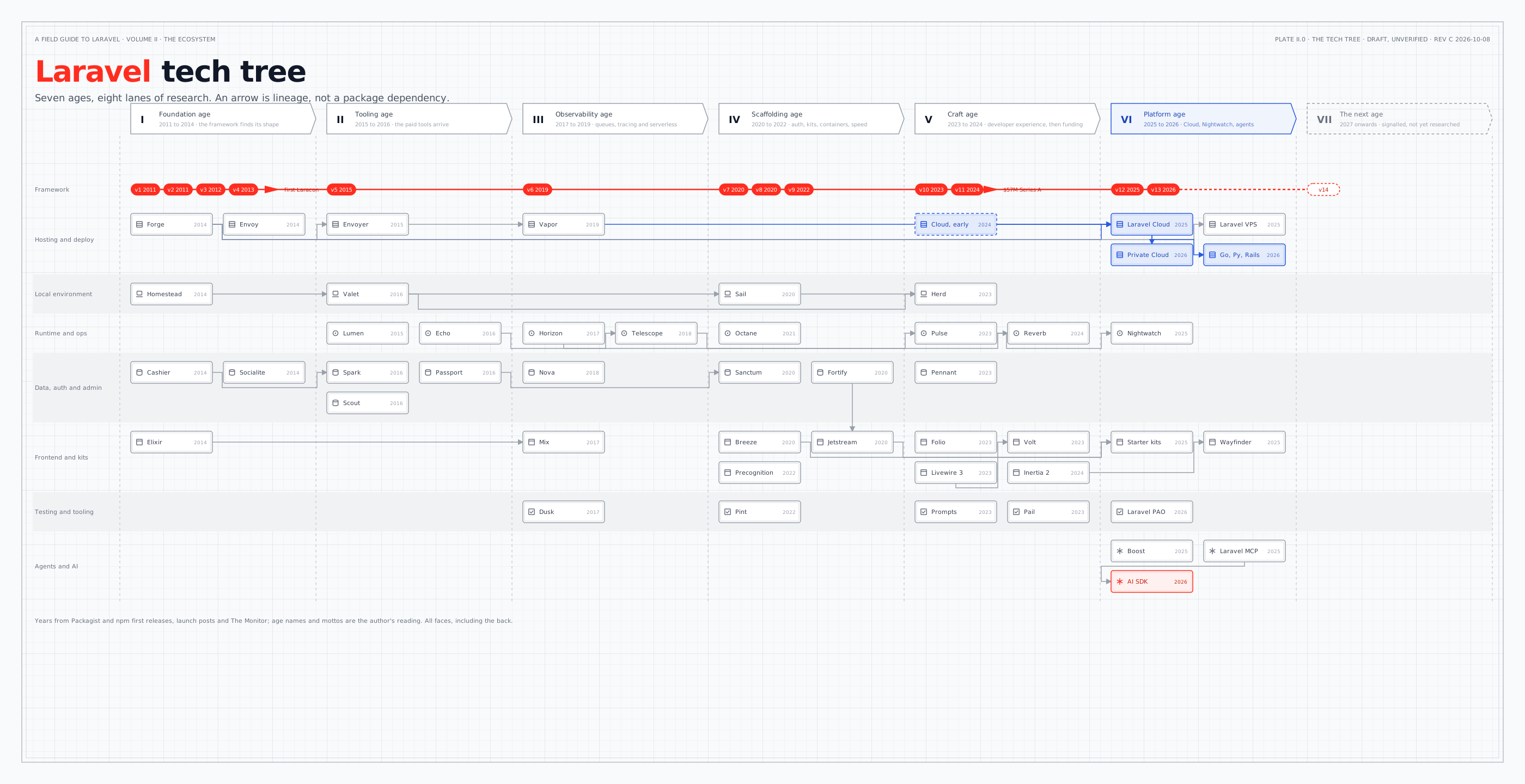
Read the ecosystem like the tech tree in a strategy game. Each age made the next one possible: a framework, then the tools around it, then a view inside the running app, then the scaffolding, then the craft. The sixth age turned all of it into a platform.
The idea in one line Every age built on the one before, and Cloud is where the tree was heading.
ResearchSeven ages · 2011 to next
On the tree: 50 inventory records, 1 still signalled
Age VI · researching
The plate
Every first-party package on one drawing, placed by the year it first appears and the lane it belongs to: framework, hosting and deploy, local environment, runtime and ops, data and auth, frontend and kits, testing and tooling, agents and AI. It is generated from the guide's inventory, so a correction there redraws it here.
The plate draws from the inventory as it stands. Where Packagist's first tags differ from the year drawn (Cashier and Socialite, 2014; Wayfinder, April 2025), the ages below give the tag. Livewire and Inertia both began in the community in 2019; the tree places them at Livewire v3 (2023) and Inertia v2 (2024).
Ages I to V · 2011 to 2024
Five ages, each with the packages that arrived and one line on what changed. Framework versions run along the top lane of the plate; they are listed with the age they shipped in.
A framework, then a way to put it on a server. Forge arrives in the same year as the first local box.
Zero-downtime deploys, a SaaS starting point, an OAuth server and search: the jobs every team was writing for itself.
A view inside the running app, then a way to run it with no servers at all.
Authentication and starter kits come in the box, and Octane keeps the application booted between requests.
Small, finished tools for the daily loop, a first-party WebSocket server, and the funding to build a platform.
Years before 2024 come from the public record and are unverified unless marked; framework major-release years are not yet checked against tags. Echo is the one verified entry in these five ages.
Age VI · 2025 to 2026 · Cloud, Nightwatch, agents
Everything the first five ages built gets a home that runs it: the framework's queues, sockets and schedules become resources you attach. Then the platform opens to agents, and to languages other than PHP.
“Laravel would not exist as we know it without Rails.”Taylor Otwell, on X, 23 September 2026 · Monitor 226
Dates from the guide's inventory and the Monitor ids shown. First tags from Packagist; announcements from the Laravel blog (Monitor 645 for MCP, 572 for PAO, 606 for Wayfinder's type-generation beta, 709 for the starter kits).
Age VII · from 2027
Taking shape, by community accounts. No release date from Laravel; none is given here. Signalled
Reported in community posts, not yet in Laravel's own release notes. Worth preparing for either way. [VERIFY]
An Eloquent defaults() method is one example seen early. The shape of the age will be clearer at the release.
Sources: Monitor 727 (30 September 2026) and 989 (4 October 2026), both community posts on X rather than Laravel announcements. Rails, Go and Python on Cloud were signalled in August and September 2026 (Monitor 255, 226) and are now documented as supported, so they sit in Age VI.
Three questions to open a talk with: which age is your own application still living in; which package from a later age would remove the most code you maintain by hand; and what would you want Laravel to research next.